In Reviewing the Project Plan Susan Sees That the First Prototype Must Be Completed by October 12
Summary
Students acquire virtually the importance of creating and testing prototypes during the engineering design process. They start by building prototypes, which is a special blazon of model used to test new pattern ideas. Students gain experience using a variety of simple building materials, such as foam core board, balsa woods, cardstock and hot glue. They present their prototypes to the course for user testing and in the post-obit action create image iterations based on feedback. (Note: Conduct this activity in the context of a blueprint projection that students are working on; this activity reflects Pace 5 and Stride 6 in a series of seven steps that guide students through the applied science design loop.)This engineering curriculum aligns to Next Generation Science Standards (NGSS).
Engineering Connection
Prototypes are routinely used every bit part of the production design procedure to give engineers and designers the ability to explore design alternatives, exam theories and ostend performance prior to starting production of a new production. Most every engineering science discipline uses prototypes in some style, including aerospace, calculator, mechanical, ceremonious, environmental and electrical engineering science.
Learning Objectives
After this activity, students should be able to:
- Explore design alternatives through the creation and testing of prototypes.
- Explain the departure between prototypes and models.
- Compare and contrast the use of different construction materials in the development of prototypes.
Educational Standards Each TeachEngineering lesson or activity is correlated to one or more Grand-12 scientific discipline, technology, engineering or math (Stalk) educational standards.
All 100,000+ M-12 STEM standards covered in TeachEngineering are collected, maintained and packaged by the Accomplishment Standards Network (ASN), a project of D2L (www.achievementstandards.org).
In the ASN, standards are hierarchically structured: first by source; e.g., past land; within source past blazon; e.thousand., science or mathematics; within blazon by subtype, then by grade, etc.
Each TeachEngineering lesson or activity is correlated to one or more Grand-12 scientific discipline, technology, engineering or math (Stalk) educational standards.
All 100,000+ M-12 STEM standards covered in TeachEngineering are collected, maintained and packaged by the Accomplishment Standards Network (ASN), a project of D2L (www.achievementstandards.org).
In the ASN, standards are hierarchically structured: first by source; e.g., past land; within source past blazon; e.thousand., science or mathematics; within blazon by subtype, then by grade, etc.
NGSS: Next Generation Scientific discipline Standards - Scientific discipline
| NGSS Performance Expectation | ||
|---|---|---|
| HS-ETS1-2. Design a solution to a complex real-earth problem by breaking it downwardly into smaller, more than manageable problems that can be solved through engineering. (Grades ix - 12) Do you agree with this alignment? Thank you for your feedback! | ||
| Click to view other curriculum aligned to this Functioning Expectation | ||
| This activity focuses on the post-obit 3 Dimensional Learning aspects of NGSS: | ||
| Science & Engineering Practices | Disciplinary Core Ideas | Crosscutting Concepts |
| Design a solution to a complex real-world trouble, based on scientific knowledge, student-generated sources of prove, prioritized criteria, and tradeoff considerations. Alignment agreement: Cheers for your feedback! | Criteria may need to be broken downward into simpler ones that can exist approached systematically, and decisions about the priority of certain criteria over others (trade-offs) may exist needed. Alignment agreement: Thanks for your feedback! | |
International Technology and Applied science Educators Clan - Applied science
- Students will develop an understanding of the attributes of design. (Grades Grand - 12) More than Details
View aligned curriculum
Do yous hold with this alignment? Thanks for your feedback!
- Students will develop an understanding of applied science design. (Grades Grand - 12) More Details
View aligned curriculum
Do you agree with this alignment? Thanks for your feedback!
- Refine a design past using prototypes and modeling to ensure quality, efficiency, and productivity of the terminal product. (Grades 9 - 12) More Details
View aligned curriculum
Do you concur with this alignment? Thanks for your feedback!
- A prototype is a working model used to test a blueprint concept past making actual observations and necessary adjustments. (Grades ix - 12) More Details
View aligned curriculum
Do you concord with this alignment? Thanks for your feedback!
- Evaluate the design solution using conceptual, physical, and mathematical models at diverse intervals of the blueprint process in order to bank check for proper blueprint and to note areas where improvements are needed. (Grades 9 - 12) More than Details
View aligned curriculum
Do you agree with this alignment? Cheers for your feedback!
- Illustrate principles, elements, and factors of pattern. (Grades ix - 12) More Details
View aligned curriculum
Do you agree with this alignment? Thank you for your feedback!
Subscribe
Get the inside scoop on all things TeachEngineering such every bit new site features, curriculum updates, video releases, and more by signing up for our newsletter!
PS: Nosotros do not share personal information or emails with anyone.
Materials List
Prototyping materials and tools for the entire grade to share may vary, depending on the project. Some suggested items include:
- foam core board
- balsa forest
- cardstock
- wooden or metallic dowels
- craft utility knives
- rulers (if using utility knives, metal-edged rulers work best)
- cutting surface, such as a plastic board, kitchen cutting board or back of a newsprint pad
- hot glue and hot glue gun
- scrap materials (have students scavenge or enquire for donations)
- Cream Core Tips Handout, 1 per team (if using cream cadre)
Worksheets and Attachments
Visit [www.teachengineering.org/activities/view/cub_creative_activity5] to print or download.More Curriculum Like This
Upper Unproblematic Lesson 
Learn to Build a Rocket in V Days or Your Money Dorsum
Students discover the entire process that goes into designing rockets. They larn about many important aspects such every bit supplies, ideals, deadlines and budgets. They too learn most the applied science blueprint process and that the outset design is almost never the final design.

Upper Elementary Lesson
Time for Design
Students are introduced to the applied science blueprint process, focusing on the concept of brainstorming pattern alternatives. They learn that applied science is virtually designing creative means to ameliorate existing artifacts, technologies or processes, or developing new inventions that do good society.

Introduction/Motivation
How does a typical engineering pattern loop begin? (Have suggestions from the students.) That's right. The engineering design process begins by defining the engineering science challenge, performing background research, brainstorming potential solutions, and evaluating several alternatives. And what is next? (Heed to suggestions from the students.) Next, an engineering team synthesizes this information to brainstorm creating the product. Many times, something that works on paper proves to be very difficult to build. To help engineering teams assess the "buildability" of their projection concept, they oft create prototypes.
A prototype is a working model of a product that is used for testing earlier it is manufactured. Prototypes help designers learn about the manufacturing process of a production, how people will utilise the product, and how the production could fail or break. A epitome is not the same thing every bit a model. A model is used to demonstrate or explain how a production will wait or part. A prototype is used to test dissimilar working aspects of a production before the blueprint is finalized.
For example, a squad of engineers designing a new cell telephone might produce several paper-thin and paper models to illustrate how the final product would look and feel. They may survey the full general public to proceeds feedback about how the cell phone could wait. The team might build a sturdier plastic prototype to test how easily the cell phone could break when dropped. If the prototype does non meet the squad's design requirements, then they may complete an "iteration." Iteration is when engineers try once again and re-design, re-build and re-test. Engineers oftentimes iterate many times before determining the final solution to a problem. Once a successful prototype has been developed, the engineering team tin can use it as a mock-upward for full-scale manufacturing.
Your team will follow a like process. Past building a prototype, you should be able to determine if your chosen design solution is viable and which aspects of your blueprint needs special materials or further refinement. Yous will also enquire other people to test your prototype to help you identify any problems a user might encounter. Y'all will have time to consummate iterations, or modifications, to your prototype in the adjacent activeness.
(Note: After conclusion of this activeness, keep to the next action in the serial, Pattern Step seven: Improve and Redesign/Manufacture a Product.)
Procedure
Background
New designs ofttimes have unexpected problems, and information technology is oftentimes difficult to determine whether a new design or product will perform as intended. Prior to large-scale manufacturing of a product, engineers frequently build prototypes. A prototype is a model of a product used to explore design alternatives, test theories, confirm operation and ensure the product is safe and user-friendly. Engineers apply prototypes to figure out specific unknowns even so present in the design.
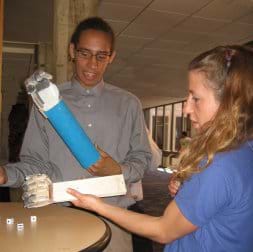
For example, a student team designing a prosthetic hand that rolls die could build a prototype using simple materials such equally wood, safe bands and string to test that the prosthetic hand performs the desired function of rolling and picking up dice. In most cases, an iterative serial of prototypes is designed, constructed and tested as the terminal blueprint emerges, is refined and becomes ready for production.
A philosophy often repeated and credited to Tom Kelley of IDEO, a successful worldwide engineering design and innovation consulting business firm, is, "Fail often to succeed sooner." It might be helpful for students in the midst of prototyping iterations to see the value of this approach as expressed by professional designers. We acquire more from failures than successes.
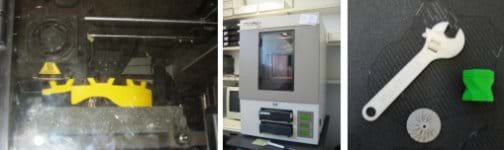
Often, the term paradigm is interchanged with the term "model," which tin cause confusion. While several types of prototypes exist, for the purpose of this activity, we will brand the following distinction: Whereas a model is used to demonstrate or explicate how a product will look or part, a prototype is used to work out the kinks in a design or to try new ideas. Keep in heed that prototypes are unrefined versions of a hereafter product. Nigh companies do not testify prototypes to the full general public to ensure that the public'south opinion is based on the final production.
In some cases, engineers "rapid prototype" a part. Rapid prototyping is the automated structure of physical objects using additive manufacturing technology and estimator-aided design (CAD) software.
Basically, a virtual pattern from CAD software is "read" by a rapid prototyping auto that divides the design into sparse horizontal slices. The machine then lays downwardly successive horizontal layers of liquid or pulverization (such as ABS plastic textile) and agglutinative in the shape of the virtual design. The primary reward of rapid prototyping is the ability to create nigh whatsoever shape or feature, including assemblies with moving parts.
Earlier the Activity (Instructor Prep)
- Collect various materials and tools that students can use to construct prototypes.
- If using foam cadre lath as a primary building material, review the tips outlined in the attached Foam Cadre Tips Handout, and make copies, one per squad.
- Pupil teams should continue with the aforementioned 3-five members each, as adamant in the first activity of this unit, Design Step ane: Identify the Demand.
With the Students
one. Explain to students the purpose of building prototypes. Mention that several types of prototypes exist, but we volition focus on creating prototypes for the purpose of testing different working aspects of a product.
2. (optional) Ask students the Investigating Questions about creating and testing prototypes.
three. Show students the available building materials (or allow them to bring in their ain if this was established in advance).
four. Review the Cream Core Tips Handout (if applies), or whatsoever other information on material use or tool condom.
five. Lead the pre-activity cess (every bit described in the Assessment section) to give students a chance to sketch their ideas before constructing prototypes. Students are asked to consummate a more detailed sketch of their design than in previous activities. Accept them label materials and specify dimensions.
6. Give students "free time" to experiment with the materials and brainstorm construction. Answer questions as they ascend.
7. Early in the construction process, briefly stop the class to lead a mini design review as described in the Assessment section (action embedded assessment). Have each team show the class their initial prototype, explain its purpose, and describe whatever challenges they have encountered during the build process. Follow with a class discussion to collaborate in figuring out possible solutions.
8. Once teams have finished the build process, accept them swap prototypes and appoint in the user testing as described in the Assessment section (mail service-activity assessment).
9. Ask the design teams to reverberate on the feedback received by summarizing the feedback and what changes they intend to make in the next iteration of their designs in the Design Step vii: Ameliorate and Redesign/Manufacture a Production activity.
Vocabulary/Definitions
balsa wood: I of the lightest varieties of wood available with remarkable strength. Because it can be carved hands and bent into a number of shapes, balsa wood is often used to build models and prototypes.
foam core lath: A lightweight and rigid cloth commonly used to produce architectural models, prototype small objects and produce patterns for casting. It consists of 3 layers—an inner foam layer (Styrofoam, polystyrene, etc.) with outer facings of slick, smoothen paper in diverse colors.
iteration: Repeating a series of steps to get closer to a desired outcome (that is, re-design, re-exam, re-build to go nearer to an optimal technology solution to a specific problem). Also: A version of the final product or solution. For instance: Our third iteration passed the strength exam.
manufacturing: The use of machines, tools and labor to make things for utilize or auction. On a big calibration, the transformation of raw materials into finished appurtenances.
model: A plan, representation (often in miniature), or description designed to evidence the primary object or workings of a product concept.
image: A model of a product that is used for testing earlier it is manufactured. Prototypes assist designers learn virtually the manufacturing process of a product, how people might use it, and its durability.
rapid prototyping: The automatic construction of physical parts and prototypes using additive manufacturing applied science directed past computer-aided blueprint modeling software. In condiment manufacturing, a material is laid down in layers to create an object.
Assessment
Pre-Activeness Assessment
Sketch It! Take students utilise their initial sketches or outlines created in the Design Pace iii activity to generate more detailed sketches of their envisioned prototypes, labeling them with dimensions and materials. Now that they accept seen the available materials, they should have a sense for the degree of the complexity achievable in this first prototype. Review the sketches with the students to bank check that they are designing prototypes, non models. If time allows, have them draw the prototype sketches to scale.
Activity-Embedded Assessment
Design Review: Briefly end the prototype construction process to bring the class together equally a group. Enquire each team to show its initial prototype, explicate its purpose (what the team is attempting to test) and describe whatsoever challenges encountered during the build process. Write these challenges on the board and lead a class brainstorming session so students may offering solutions to other teams' challenges. (Note: Culling options for performing design reviews include: request the team to present to a pocket-size "client focus group" that includes the teacher and a few others, having students rotate around the room and review for one other team, or request another course to come up in to mind and provide feedback to initial pattern descriptions.)
Mail service-Activeness Cess
User Testing: To simulate user testing, accept each squad swap prototypes with some other squad. Ask teams to give each other feedback:
- Is the prototype functional? What works? What does not piece of work?
- Is the prototype used to explore several design alternatives?
- What improvements could be fabricated?
Reflection: After user testing, inquire the pattern teams to reflect on the feedback received. Have them write short documents for the teacher summarizing the feedback and what changes they intend to brand in the next iteration of their designs.
Investigating Questions
Apply the following discussion questions to help students gain understanding of an important attribute of engineering trouble solving: creating and testing prototypes.
- What is an advantage of building a epitome prior to full-scale manufacturing? (Possible answer: Exploring design alternatives with a prototype saves resources [time, money and materials] required to manufacture a concluding product.)
- Why might most engineering companies refrain from releasing a prototype to the full general public? (Possible answer: Because they want the public's opinions to exist based on the final product, non on early on versions and rudimentary prototypes.)
Condom Problems
- This is the showtime point in the blueprint cycle in which safe issues are important. Remind students to exist careful when using hot glue, utility knives, and structure materials and tools.
Troubleshooting Tips
If students become frustrated with the way their initial prototypes look, remind them that prototypes are used to test out new ideas and are not meant to expect perfect!
Activity Extensions
Limitations to Prototypes: Have student teams brainstorm the limitations of prototypes and generate lists of ideas. Engage the form in a discussion of these limitations and aggrandize the discussion to talk about what can be done to accurately determine these factors for final production. For example, limitations might include evaluating costs, time to build, textile function and bodily environmental impact.
References
Image. Last updated January i, 2010. Wikipedia, The Costless Encyclopedia. Accessed Jan 27, 2010. http://en.wikipedia.org/wiki/Prototype
Rapid prototyping. Last updated January 13, 2010. Wikipedia, The Free Encyclopedia. Accessed January 27, 2010. http://en.wikipedia.org/wiki/rapid_prototyping
Sloane, Paul. Failure is the Mother of Invention. Published October 13, 2004. Innovation Tools. Accessed February nine, 2009. http://www.innovationtools.com/Articles/EnterpriseDetails.asp?a=158
Copyright
© 2009 past Regents of the University of ColoradoContributors
Lauren Cooper; Malinda Schaefer Zarske; Denise W. CarlsonSupporting Plan
Integrated Teaching and Learning Program, Higher of Technology, University of Colorado BoulderAcknowledgements
The contents of this digital library curriculum were developed nether a grant from the Fund for the Comeback of Postsecondary Educational activity (FIPSE), U.S. Department of Pedagogy and National Scientific discipline Foundation GK-12 grant no. 0338326. However, these contents practice not necessarily correspond the policies of the Department of Pedagogy or National Science Foundation, and y'all should not assume endorsement by the federal government.
Last modified: Apr 16, 2022
Source: https://www.teachengineering.org/activities/view/cub_creative_activity5
0 Response to "In Reviewing the Project Plan Susan Sees That the First Prototype Must Be Completed by October 12"
Post a Comment